

Synthetic medical image datasets generated using powerful generative models like generative adversarial networks (GANs) offer a reliable solution to augment real-world data.
Addressing data scarcity and enhancing the accuracy and robustness of machine learning algorithms in medical diagnosis, these datasets can be enriched with diverse images covering various subgroups, rare skin conditions, and pathology.
By alleviating data scarcity, synthetic datasets improve model generalizability and enhance diagnostic capabilities.
These advancements may revolutionize the field of medical imaging by providing more accurate and reliable models.
Table of Contents Toggle
- Key Takeaways
- Building Synthetic Image Datasets
- Diversity and Robustness Enhancement
- Dealing With Limited Real Data
- Generating Rare Skin Conditions
- Addressing Signal-to-Noise Ratio Issues
- Handling Background Variability
- Powerful Generative Models
- Anonymisation and Regulation
- Frequently Asked Questions
- What Is Synthetic Data for Training Models?
- What Is the Difference Between Synthetic Dataset and Real Dataset?
- What Is the Difference Between Synthetic Dataset and Real Dataset?
- What Is the Training Dataset in Artificial Intelligence?
- Which Deep Learning Model Is Best for Medical Image Classification?
Key Takeaways
Generative models, such as DermGAN, improve diversity and size of training data.
Synthetic data helps models perform well on rare diseases by covering a broader range of subgroups.
Combining synthetic and real data increases model generalizability and accuracy in medical imaging applications.
Building Synthetic Image Datasets
Building synthetic medical image datasets involves leveraging generative adversarial networks (GANs) to produce high-quality, realistic images that mimic the probability distributions of real-world data.
This approach empowers the creation of diverse and detailed datasets, enhancing the robustness and adaptability of AI models in medical imaging applications.
The DermGAN model, a type of GAN, demonstrates exceptional capabilities in generating skin images with specific skin conditions, locations, and underlying skin colors.
This level of customization fosters the generation of realistic synthetic images that can augment real-world datasets, contributing significantly to the field of medical imaging.
Diversity and Robustness Enhancement
Synthetic medical image datasets can be significantly enriched by incorporating generated images that cover a broad range of subgroups, resulting in notable enhancements in model diversity and robustness.
This diversity is crucial for both rare diseases and prevalent conditions where available data is limited. Convolutional neural networks (CNNs) trained on synthetic images have demonstrated improved performance in detecting diseases with increased accuracy and robustness.
Combining synthetic and real data from diverse sources enhances model generalizability.
This indicates that synthetic data supplementation can be an effective strategy to improve the performance and robustness of medical AI models.
Synthetic data can bridge the data scarcity gap and increase the size and diversity of medical datasets, ultimately leading to better AI models for medical imaging.
Dealing With Limited Real Data
Synthetic data generation offers a reliable solution for machine learning applications facing limited real data. The scarcity of real medical datasets hampers their size and diversity. This constraint is more pronounced for rare diseases, where sufficient data is hard to come by.
Synthetic data can enrich the training pool with virtual representations of various diseases and scenarios. This diversified dataset can train models more thoroughly, leading to more precise diagnoses and better patient care.
Synthetic data can enhance the size and diversity of the training dataset. It provides manifold scenarios and countless images for efficient model training, focusing on rare and underrepresented data.
This approach ensures accuracy in diagnosing conditions that are less prevalent in real-world datasets. The potent capabilities of synthetic data generation significantly improve medical imaging model robustness and applicability.
Synthetic images specifically in dermatology can reflect different skin types, lesion patterns, and appearances. This guarantees effective diagnosis, as it can cover variable scenarios involving rare conditions.
The detailed analysis of medical imaging models becomes more precise when trained on a richer, synthetic dataset. The outcome is enhanced patient care.
Generating Rare Skin Conditions

DermGAN is valuable for dermatology datasets because it can generate images of rare skin conditions, overcoming the challenges posed by scarce images with diverse skin types and conditions.
This dermatology model, derived from the Pix2Pix GAN architecture, translates semantic maps of skin conditions into realistic images that vary in characteristics such as size, location, and skin color.
The generator's capacity to create diverse images of rare skin conditions is attributed to customized losses that emphasize high-quality pathological regions, increasing the overall realism of the generated images.
This ability enhances dataset diversity, which can notably improve the adaptability and robustness of artificial intelligence (AI) models trained on these datasets.
Moreover, the generator can simulate real-world image capture processes, including optical blurring and sensor noise, to create more realistic out-of-focus characteristics.
This feature adds to the credibility of the synthetic images, making them invaluable for augmenting and enhancing dermatology datasets.
Addressing Signal-to-Noise Ratio Issues

Optimizing signal-to-noise ratios in medical imaging datasets is a pivotal challenge to overcome, particularly in dermatology where capturing the fine details of skin conditions requires a high degree of accuracy.
The current scarcity of high-quality medical image data and the variability in background noise imposes substantial barriers to generating realistic synthetic images.
Generative models, such as DermGAN, employ customized losses to enhance the signal-to-noise ratio by more accurately simulating the sequence of events prior to image capture.
Adjusting models to account for factors like optical blurring, sensor noise, and software compression can improve the quality of synthetic images.
Denoising diffusion probabilistic models have shown promise in addressing these issues.
Incorporating these models into the synthetic image generation process can produce high-quality synthetic images that better reflect real-world conditions, thereby improving the signal-to-noise ratio.
This approach can substantively augment medical imaging datasets, providing researchers with more diverse and accurate data to train machine learning models, ultimately enhancing diagnostic accuracy in dermatology and beyond.
Handling Background Variability
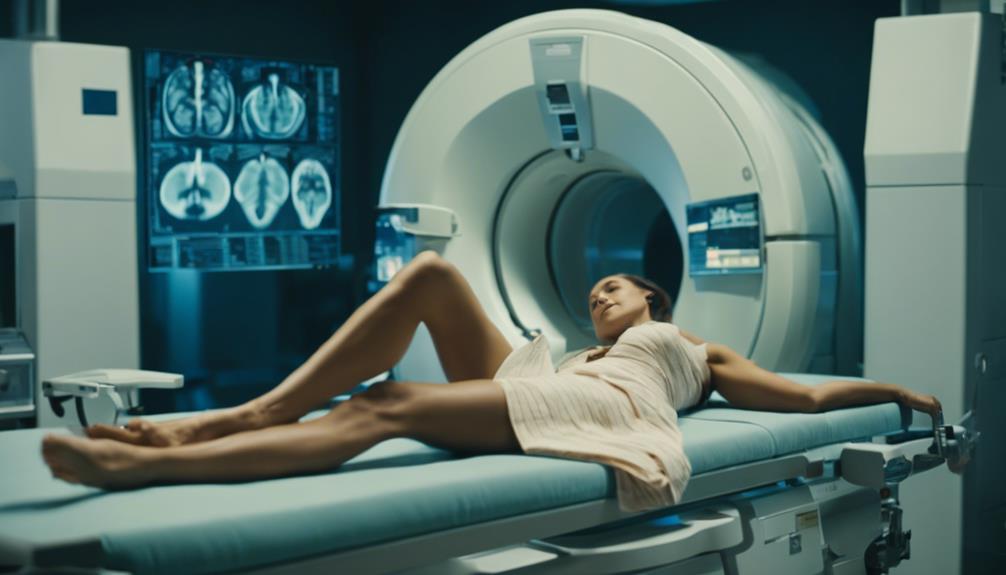
Handling Background Variatility
Handling background variability in synthetic medical image datasets is a significant and intricate challenge. This task requires accounting for complex interactions between scanner optical properties, stitching procedures, and image acquisition conditions, which significantly impact the accuracy and realism of synthetic images.
Effective handling of background variability is crucial for synthetic datasets to mimic real-world medical images accurately, thus enhancing machine learning model training and medical diagnosis.
One promising approach includes utilizing generative adversarial networks (GANs) and diffusion models, which have shown the ability to generate synthetic images mirroring the demographic and pathological traits of the original data, including background variability. Generative models can reproduce realistic images from diverse datasets, thereby aiding in the creation of robust and adaptable AI models.
Synthetic data can enhance diversity in datasets and improve the robustness and adaptability of AI models. The lack of labeled data and variability in scanner properties and stitching procedures make it challenging to gather data for modeling background variability. Image acquisition settings and software compression further complicate this task.
Powerful Generative Models
Generative Models and Medical Imaging have made significant strides in recent years, particularly with the development of diffusion models and generative adversarial networks (GANs).
These powerful tools have addressed data scarcity issues in medical imaging, creating highly realistic synthetic images that foster accuracy and adaptation in AI models.
Data Augmentation and Realism
Synthetic images generated by GANs have proven almost indistinguishable from real images, making them ideal for training AI models. For example, CNNs trained on synthetic images have shown remarkable ability in detecting plus disease in retinopathy of prematurity.
The progressive growing of GANs has improved the quality, stability, and variation of generated images.
Chest X-ray Analysis and Classification
Synthetic data generated by diffusion models has substantially enhanced the accuracy of deep learning classifiers for chest X-ray analysis, particularly in detecting less prevalent pathologies.
The use of these synthetic medical images has the potential to increase the size and diversity of medical datasets, ultimately improving the robustness and generalizability of AI models.
Future Applications
With continued advancements in generative models, their application in medical imaging is expected to grow, providing valuable tools for researchers and clinicians to develop more accurate and reliable AI models.
Anonymisation and Regulation
Synthetic medical image datasets generated by generative models raise significant concerns regarding anonymization and regulation. These concerns are underscored by the need for more stringent regulations to protect patient privacy and security.
This includes utilizing synthetic-data-driven differential-privacy systems to regulate software that may leak protected health information (PHI). Differential privacy and regulatory compliance are crucial to ensure the secure handling of synthetic data.
Maintaining a balance between privacy, diversity, and fidelity in synthetic datasets is a significant challenge.
Human evaluation plays a vital role in iteratively refining AI-SaMDs, making them more fault-tolerant and minimizing the risk of PHI leakage. Leveraging tools like differential privacy can provide strong assurances of privacy protection.
This emergent trend in synthetic data generation underscores the importance of synthesis validity and sheds light on the future of data regulation in healthcare, where more secure and effective methods are imperative.
Frequently Asked Questions
What Is Synthetic Data for Training Models?
Synthetic data for training models refers to artificially generated data used to boost model performance, particularly in cases of data scarcity. This approach leverages data augmentation and image generation techniques to enhance data quality and diversity while addressing issues such as label accuracy, data imbalance, and noise reduction.
Key Takeaways:
Synthetic data can be used to supplement real data when training machine learning models.
This approach can improve model robustness and efficiency.
Synthetic data can also help mitigate the negative impacts of data imbalance and noise.
What Is the Difference Between Synthetic Dataset and Real Dataset?
What Is the Difference Between Synthetic Dataset and Real Dataset?
Synthetic data guarantees visual fidelity and domain shift for high-quality visual and domain-specific research.
Real data is accurate and comprehensive but often difficult to obtain, expensive, and may contain sensitive information.
Synthetic data fills gaps in real datasets, improves model performance, and offers data privacy, scalability, and simplicity.
What Is the Training Dataset in Artificial Intelligence?
Training Dataset in Artificial Intelligence
A training dataset is critical initial data used to teach machine learning models specific tasks, such as image recognition and language processing.
Key Takeaways:
Data quality and augmentation are crucial for peak model performance.
Well-crafted datasets enable models to learn patterns and relationships accurately.
Selecting diverse and representative data prevents biased model predictions.
Which Deep Learning Model Is Best for Medical Image Classification?
Deep learning methods have significantly improved medical image classification tasks. Transfer learning and Convolutional Neural Networks (CNNs) have emerged as key techniques in this field.
Transfer learning is effective due to its ability to leverage pre-trained models to learn features from large datasets and apply them to smaller medical image datasets, improving performance on specific classification tasks.
Convolutional Neural Networks demonstrate exceptional capabilities in extracting features from images, allowing for significant advancements in applications like object recognition and medical diagnostics.
Data augmentation, when combined with these techniques, can further enhance diagnostic accuracy by generating additional training data and encouraging models to learn more robust features.